


 This article will be addressing the last in a series of 3 questions that we’ve asked about Podtrash. The 3 questions are as follows;
- Does Podtrash Have an Alcohol/Drug Problem?
- Is Podtrash Racists and/or Homophobic?
- Will Podtrash survive in 2017?
So, will Podtrash survive in 2017? Unlike the first 2 questions, this one is more straight forward. We do have to make a distinction though, there is “survive” as in keep the lights on, and there is “survive” as in actually merging into the podcast market to become revenue positive.
Surviving to keep the lights on. As far as surviving in this context, yes, I think without a doubt Podtrash will be around to bring in 2018, so long as no tragic accident befalls Wush, Podtrash’s owner. Just to be clear, a ‘tragic accident’ could include everything from a complete emotional breakdown, to an actual physical coma induced by Robyn’s incessant attempts to violate him anally. But let’s consider the light bill for Podtrash. It is in the hundreds of dollars annually, and if you add the time investment spent on doing shows and other PT related stuff, the price to keep PT running is significant. However, I don’t think that will be the proverbial ‘bump in the road’ that would cause PT to be no more.
 Survival in the context of ROI. Return of Investment (ROI) is going to be the key determining factor as to whether PT is going to be around another year (or more). As PT's founder and beloved owner stated recently on-air, “If PT was a company it would be in bankruptcy”. That conversation was not just about the cash for the bills, although that was part of it, it was more about people in general receiving a return for their investments of time and effort as well as keeping the ‘fun’ factor alive. In other words, if there is no light at the end of the rainbow, then PT could die a slow painful death. Consider this well-known entrepreneurial quote;
“Any business that after three years isn’t profitable isn’t a business, it’s a hobby.”
~Kevin O’Leary
Framing the question. So if we frame this question of PT’s survival, as if relates to a hobby and not a business, the answer becomes somewhat obscure. No one can determine the future decisions of another, but you can classify certain elements of the question for the sake of clarity and to help understand the increase or decrease in the probabilities of a certain conclusion. For example, if PT can be classified as a business, then the probabilities are more likely that it will survive because there are potential monetary benefits, and those are lost by shutting it down. On the other hand, if PT can be classified as a hobby, then the probability is less likely that it will survive because there are no monetary benefits in keeping it running, and there would actually be financial savings in shutting it down.
 A point that should be addressed before we go any further, the big fucking pink elephant in THIS room, which is the call for network changes that come from both podcasters and sometimes members of the community. Wush recently stated on-air, a scenario that often plays out as far as recommendations and the network goes, and its relevant to this discussion of 'change' because we have touched on this subject for all 3 of our questions. Anyway, this scenario involves the voices that consistently call for changes on the PT network. We hear a lot of, “things need to change”, or voices that suggest there is a “better way” of doing things, and it’s easy to throw ones 2 cents into the ring, but as far as this article is concerned, that goes beyond our original question. Maybe we’ll revisit that as a separate subject in a different article, or maybe not. You know the whole opinions and assholes cliché, but I would like to touch on PT as it relates to its advertising market potential.
First let’s consider where the real money in advertising is, which can help put things into perspective better. We use advertising as an example because that’s the most obvious and common form of revenue in podcasting. And no, I don’t mean just audio ads or those cheesy flashy ads you might see on a porn site banner that wants to increase your dick size. I mean real ad deals with established brands where a significant amount of money is in play. Those types of sponsor deals are concerned with audience reach, and could cover any type of ad space to include website ads, social media plugs, audio plugs or a sponsored You Tube video. The chosen platform is less important than audience reach and engagement. But either way there is no doubt about where the big bucks come from, it’s in the brand deals. Just ask any successful You Tube creator, and they will also tell you that the You Tube networks are a big part of that, as their network helps with getting those deals by acting as liaison and negotiator. Let’s not forget, the whole point of a network from a creator’s standpoint is support, and in return the network gets their piece of the pie, but ultimately audience reach is the creators burden.
 How big is Podtrash? The easiest way to determine this of course is to look directly at a breakdown of a given month’s traffic numbers using a variety of measurements, but that information is not generally available to the public. However, during a SEO (Search Engine Optimization) type of conversation between Podgas and Wush, which occurred on-air in either November or early December, during a late night ‘after show’, Wush stated that PT receives approximately 20k or more in unique page views a month. It’s also worthy to note that, that number doesn’t take into consideration PT’s ITunes audience, which could be added to PT’s estimated audience reach. So what’s the 20k number mean? It means that the ground work has already been done, and I know, it’s been two years so it’s a no brainer that it “should” have happened, but it doesn’t always work out that way. The internet is littered with thousands of podcasters or networks that tried and failed, or those who are still trying but have little chance of it becoming anything other than a fun hobby. Not that there is anything wrong with some fun, but as we pointed out earlier, the fun does have a price. Regardless though, the potential for PT to move forward by creating a successful advertising platform is right there looking it in the face. Yes, some of the hurdles to overcome in accomplishing that might seem big, but when you consider the present advantages that PT maintains over a shit ton of its podcasting peers, that should serve as as huge motivational factor for those involved to conquer any personal demons that might be at issue, so they can stick around for any rewards that result from PT's succses. Maybe that means a lot of blood, sweat and tears, and maybe not, but for sure it could mean the difference between keeping PT around or it falling into the endless pit of internet irrelevance.
 Will Podtrash survive 2017 as a business or brand? like with the other questions we addressed we have to look at PT with our business hat on to consider whether or not it can become a viable revenue stream in 2017, which is its 3rd year in operation. The simple answer is, hell yes it will. Maybe. PT has the potential to become a legitimately perceived business or brand in the year to come, but it’s obvious that some new strategies may be needed, because the status quo hasn’t lined any pockets to date. What those strategies are or when they are enacted are the burdens of PT’s owner, but there’s nothing stopping people from expressing their ideas. Just don’t start off by saying “things need to change”, or I know a “better way”, instead maybe just express what your idea is. So in closing, I think we can definitively conclude beyond a shadow of doubt, at this point in time in 2017, PT has all the puzzle pieces in place that success in business requires. For the sake of everyone involved I hope PT can make that jump, It’s just a matter of whether or not the founder of PT, Mr. Wushdishmeen, can find his inner entrepreneur or not.
 In this article we are going to be addressing the 2nd of 3 questions that we’ve asked about
 Before answering this question fairly, we have to consider some factors first. Racist or homophobic ideologies are largely emotional based concepts or opinions, so human nature should at least be considered before people go around slapping homophobic or racist labels on things. So first let’s consider when people discuss sex or related topics. Our reactions or responses for sex related topics, generally speaking, are more susceptible to our emotional reasoning versus say, discussing how long it takes to get to the center of a fucking tootsie pop (and it’s more than 3 you asshole owl). Even if sex isn’t directly playing into a conversation, as far as the subject matter of LGBT is concerned, our brains still maintain an association with sex. To a casual observer, the discussions that involve LGBT can essentially be broken down to what those people are doing with their vaginas or penises, and other peoples reaction to it. But that whole conversation can quickly turn into this big emotional mess of opinions and non-quantifiable reactions. People’s brains just ‘tick’ differently when the subject of sex is involved insofar as how we exercise reason, judgment and conclusions. Just try to start a conversation with a friend or family member and start with something like, “did you hear about who got caught jacking off at McDonalds”, or “did you hear about what Linda Loose Lips did with Semen Sam?”, you’ll see their ears perk up, their brows furrow or eyebrows raise. You will have captured their undivided attention. As
  Ted the Handyman. I’ll make this brief, because this article is too long already, and I’m only telling it because it has relevance to points being made, and it is a true story. On a fine Spring morning several years back, Ted got caught masturbating in our local community college parking lot to the girls walking by, he didn’t expose himself to anyone and as the story goes he was trying to be sneaky about it, but he was caught by a security guard doing his rounds. Ted made our local newspaper along with the associated charges. He was a social guy even after masturbation-gate. He had a full time job, wife and kids, the whole 9 yards. The town I lived in had a population of around 15k or so, and I’d see Ted out and about all the time. I knew him well enough that we’d say hello and he was one of those really nice guys that never had a bad word to say about anyone. I’d see him at the local restaurants, movie theater or even at our local bars. On at least 20 different occasions, no matter where I was at or who was around or what we were talking about, someone always made a point to ask me if I had heard about ‘Ted the Handyman’. This happened even years after Ted’s incident, and whenever he was around. The first few times were funny, and I know I re-told the story at least once, but after that I just felt pity for Ted, and eventually the Ted the Handyman story just pissed me off. It was reasonable to conclude that not one of those pricks that told that story (all dudes) were innocent of jerking off, they’d all probably jerked it to legal teen porn on the internet, and none of those shit bags were free of sin. Unless Ted moves, no matter what he accomplishes in his life, he’ll always be known as Ted the Handyman aka the college parking lot jerk off guy.
 Racism and the comedic conundrum. So what about racism, is PT racist as an entity or brand? From the inside looking out (which is sort of my perspective) it’s easy to say no, PT is not. Although It’s accurate to say that many of the podcasters on PT use the N word frequently, but it’s mostly done to get a cheap laugh. There are genuine feelings among some podcasters about certain races being shit compared to theirs, but generally speaking most PT podcasters approach the subject of race in jest and don’t ponder on it long. Although that is not always the case, and there’s some irony involved with the question of racism (and homophobia) on PT. As an example, one of the most heard voices on the network (we’ll call him Chap) shouts the loudest about others being racist or homophobic, but his favorite drop is an audio clip saying ‘faggot’ and he has an original song, which he seems very proud of as he plays it often, which has lyrics that warn “the niggers are coming”. So while an insider could claim PT is not racist and it’s in the spirit of uncensored comedic podcasts, the conclusion of a typical outsider looking in could be short and not so sweet. Without any knowledge of the podcasters as individuals or the network as a whole or any pre-conceived notion about PT, the conclusion of whether PT is racist, as it supports a variety of content that can be construed as racist, could be a justifiable, yes.
 I started this article a couple of times in the last day or so but it’s a difficult subject to breach for several reasons. If you take the funny approach to answering these questions, is it really worth writing about? Hell anyone can make a joke, right? Look at Booney, while his joke batting average is only around .136, even he can be funny.
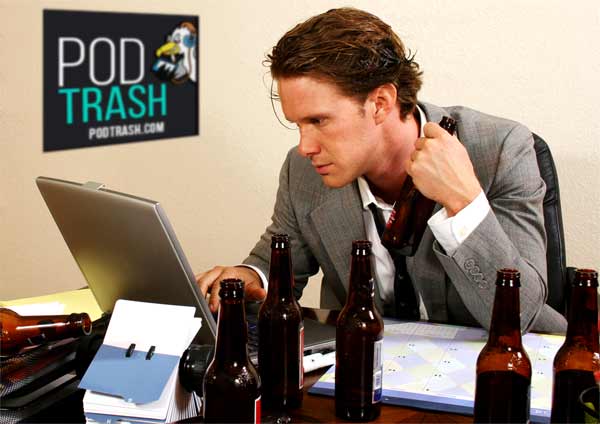
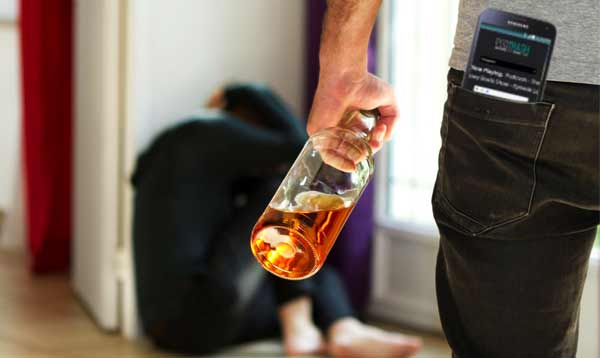 So, does PT have a drinking or drug problem? To be fair we have to begin with the podcasters who have had podcasts on PT during the last several months or even years. If we listed them all and put a tidy little checkmark in a YES or NO box as to whether or not those podcasters indulged in drugs on-air (including alcohol) or right before airing, then yes. It’s fair to conclude that a majority of PT hosts indulge in those types of activities, but is it a problem? And if it is a problem, is it a problem for PT or is it a problem for just those individuals? Also do these activities hamper or even help those podcasters actually host a show? See, even the easiest question of the 3 asked, is so fucking complicated that it would be much simpler to shrug off and not think about. But it’s the big fucking
 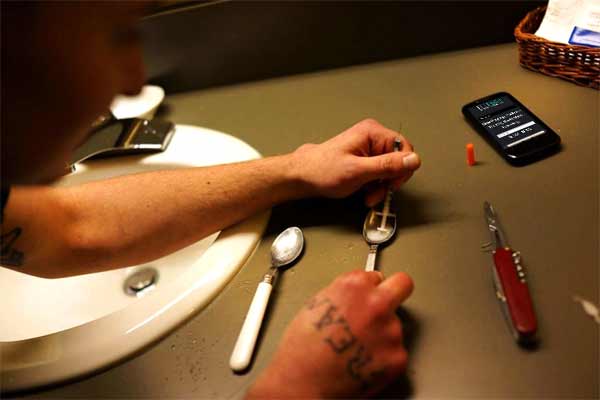 So the simple answer to, does PT have a problem with drugs and alcohol, is yes. PT listeners have seen or heard podcasters who were “blacked out” during shows or those podcasters who may be functional but fucked up in a manner that makes it obvious that it effects their content. This is not to point fingers, but to say listeners have heard the complete spectrum of drug and alcohol type of influences from most of the podcasters. They have been witness to adverse changes in a given show or attitude, which whether admitted to or not, drugs & alcohol often played a direct role in. So by definition, the conclusion of whether or not it’s a problem on PT is an unavoidable, yes. Let’s be honest and real, it happens a lot and let’s also be honest and admit that the listeners of PT LOVE it, we can’t stop watching the train wrecks and ensuing drama. So for the most part as far as listeners are concerned, keep up the party, it’s no problem what so ever. Enable you say? Hell we’ll enable you, here are some empathizing words and an ‘atta boy’, now get back on that train so we can listen for the wreck. Then after we the listeners feel better about ourselves for giving them a proverbial ‘Pat on the Back’ (there are a lot of circle jerks), we sit back and laugh at those silly monkeys catching themselves on fire again, and cheer with enthusiasm.
 So why label drugs and alcohol as a problem? After all, the host are voluntarily participating and the listeners are voluntarily listening to the results. Maybe if one considers sustainability and the big picture, then the importance of labeling may become more understandable. Minimally it creates an understanding that it’s something that should be addressed or improved upon. How to “fix” it is beyond the scope of this article, but pointing out the relevance of doing so is not. The unavoidable consequence of any person with a real drug and alcohol problem is the Big Crash. Most have seen or experienced it in real life first hand or with a friend or family member. The Big Crash is either emotional (which we’ve seen on PT) or physical (which we’ve also seen on PT). During that time, it’s all lol’s for fans but not so much PT as an entity or brand. Post-crash recovery for individuals usually entails returning to primal priorities like self and family (takes ball and goes home), or it’s an attitude change that effects the 'funny'. As listeners, we have unlimited entertainment options (the internet), and the podcasters carry on as normal for the most part. So who’s getting the short end of the stick after the Big Crash? I mean besides the obvious answer of the podcasters friends or family. It’s my assertion that the overall consequences of any drug and alcohol influenced problems on the network may ultimately fall on PT as a brand. But what the hell do I know, hand me that bottle and stop bogarting your coke. It’s time to party.